

Geotextiles in Soil Reinforcement
In civil engineering, soil reinforcement technology is widely used in projects like embankments, slope protection, retaining walls, and soft soil foundation treatment. Geotextiles, as a key material in soil reinforcement, play an irreplaceable role in enhancing soil structure and overall stability due to their unique physical and mechanical properties. This article aims to delve into the basics of geotextiles, the principles of soil reinforcement technology, applications of geotextiles in soil reinforcement, key technologies and challenges, case studies, economic and environmental benefits, and future trends and outlook.
Basics of Geotextiles
Definition and Classification
Geotextiles are planar or three-dimensional mesh materials made from synthetic fibers (such as polyester, polypropylene) through processes like weaving, needle-punching, or stitching. Depending on their functions and applications, geotextiles are classified into several types, such as reinforcement geotextiles, anti-seepage geotextiles, and drainage geotextiles. Reinforcement geotextiles are particularly suited for soil reinforcement projects due to their high tensile strength and elongation.
Performance Characteristics
High Strength and Toughness: Capable of withstanding significant tensile and tear forces, effectively resisting soil deformation.
Corrosion Resistance: Chemically stable and resistant to erosion by acids, alkalis, and salts.
Permeability: Typically has some permeability, facilitating drainage within the soil and reducing hydrostatic pressure.
Ease of Construction: Simple to cut, join, and install, adapting to various complex terrains and construction conditions.
Principles of Soil Reinforcement Technology
Soil reinforcement technology involves adding reinforcement materials (such as geotextiles) to soil to improve its mechanical properties. The basic principle is that the interaction between geotextiles and soil particles (such as friction, interlocking, and confinement) creates a composite soil structure. This structure allows the geotextiles to bear part of the tensile stress and distribute the stress across a broader area of soil, thereby enhancing the overall stability and bearing capacity of the soil.
Applications of Geotextiles in Soil Reinforcement
Embankment Reinforcement
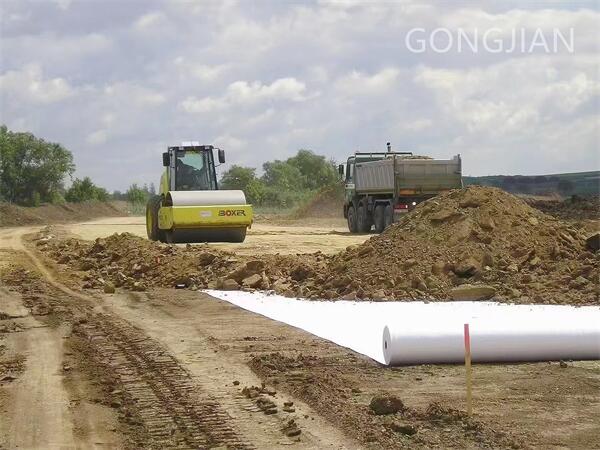
In embankment construction, geotextiles can effectively control lateral deformation, prevent landslides and settlement, and ensure road stability and driving safety. Geotextiles are typically laid at the base and slopes of the embankment, working with fill materials to form a stable soil structure.
Slope Protection
For slopes prone to landslides or collapses, geotextiles provide reinforcement that enhances overall stability and reduces soil erosion. Geotextiles tightly bond with the slope soil to form a continuous protective layer, effectively resisting rain and wind erosion.
Retaining Wall Design
In retaining wall projects, geotextiles used as reinforcement materials can improve the walls resistance to overturning and sliding. Proper placement and fixation of geotextiles can create effective reinforced soil retaining walls, reducing wall thickness and foundation pressure, thereby lowering construction costs.
Soft Soil Foundation Treatment
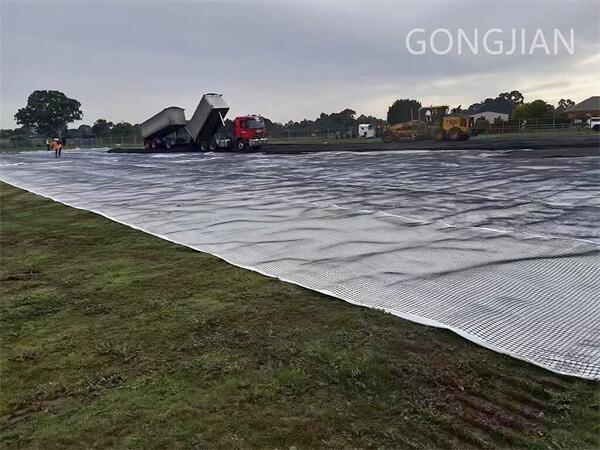
In soft soil foundation treatment, geotextiles can be laid on or within the foundation surface to enhance bearing capacity and drainage performance due to their high tensile strength and good permeability. Geotextiles also help limit lateral soil deformation, ensuring the stability of the superstructure.
Key Technologies and Challenges
Key Technologies
Design Selection: Choose suitable types and specifications of geotextiles based on project needs, soil conditions, and environmental factors.
Installation: Ensure geotextiles are laid flat, wrinkle-free, and undamaged, and take effective measures to secure them in place to prevent shifting.
Seam Treatment: Use specialized equipment for welding or stitching geotextile seams to ensure they are sealed reliably, with no leakage.
Monitoring and Maintenance: Regularly monitor reinforced soil to observe deformation and stability, and promptly address any issues.
Challenges
Complex Geology: Soil reinforcement projects face challenges under various geological conditions, such as soft soils and expansive clays.
Long-Term Stability: Geotextiles may degrade over time due to environmental factors (e.g., UV rays, temperature, humidity), affecting reinforcement effectiveness.
Cost Control: High-quality geotextile materials and construction techniques often involve higher costs, making it important to control expenses while ensuring quality.
Economic and Environmental Benefits
Economic Benefits
While the initial investment in geotextiles may be relatively high, they offer significant long-term economic benefits. Geotextiles enhance soil stability and bearing capacity, reducing maintenance and repair costs. Optimizing design and construction methods can further reduce project costs and improve economic efficiency. Additionally, a stable soil structure extends the service life of the project, minimizing losses from soil instability.
Environmental Benefits
The use of geotextiles in soil reinforcement provides notable environmental benefits. Firstly, they help reduce soil erosion and protect the ecological environment. In slope protection and embankment reinforcement projects, geotextiles effectively control soil particle migration, preventing environmental damage. Secondly, geotextiles promote vegetation growth and improve ecological conditions. In slope protection projects, geotextiles are often covered with soil and vegetation to create an ecological protection layer, enhancing vegetation cover and biodiversity. Additionally, geotextiles, being recyclable, can be recovered and reused through specialized channels, reducing environmental pollution.
Future Trends and Outlook
Technological Innovation
With advances in technology and ongoing engineering practice, geotextile applications in soil reinforcement will continue to evolve. Innovations will include the development of new materials and processes, such as higher strength and better corrosion resistance, and more convenient installation and seam treatment technologies. Additionally, the integration of smart and informational technologies will provide more possibilities, such as real-time monitoring of soil deformation and stability, offering scientific support for project maintenance and management.
Environmental Protection and Sustainability
As global emphasis on environmental protection and sustainable development grows, the use of geotextiles will increasingly focus on environmental and sustainability aspects. This includes improving the environmental friendliness of raw materials and production processes, and enhancing the recycling and disposal of geotextiles. Strengthening international cooperation and exchange will also advance technological innovation and application of geotextiles in soil reinforcement, contributing to global environmental protection and sustainable development goals.
In summary, the application of geotextiles in soil reinforcement holds broad development prospects and significant social importance. As technology advances and application fields expand, geotextiles are expected to play a crucial role in enhancing safety, environmental protection, and sustainable development in civil engineering.
