

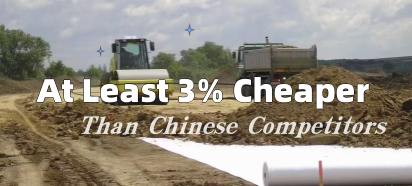
Geotextiles for Slope Protection and Erosion Control
With the rapid development of infrastructure, slope protection and erosion control have become crucial for ensuring the stability of engineering projects and the safety of the ecological environment. Geotextiles, as a key geosynthetic material, play an irreplaceable role in slope protection and erosion control due to their superior performance and wide applicability. This article will discuss the definition and classification of geotextiles, the importance of slope protection, the application of geotextiles in slope protection, and the principles for selecting them.
Definition and Classification of Geotextiles
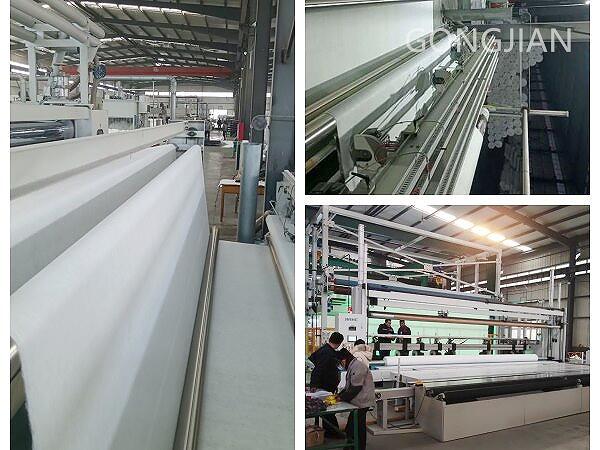
Geotextiles are geosynthetic materials made from polymer fibers through processes such as weaving, needle punching, or heat bonding. They are mainly made from polymers like polyester, polypropylene, and nylon, and are characterized by their permeability, high strength, and durability. Depending on the production process, geotextiles can be classified into three types:
· Woven Geotextiles: Made from high-strength fiber materials through weaving, these geotextiles are tightly interwoven in both the warp and weft directions, offering high tensile strength and excellent tear resistance. They are suitable for applications requiring substantial load-bearing capacity.
· Needle-Punched Geotextiles: Made from short fibers through needle-punching, these geotextiles have a loose structure with good water permeability and strong UV resistance, making them suitable for situations that require substantial drainage.
· Heat-Bonded Geotextiles: Made from filament fibers through heat bonding, these geotextiles have a smooth surface and uniform thickness, ideal for applications requiring good sealing performance.

Importance of Slope Protection
Slope protection refers to measures taken to safeguard and manage surface slopes to prevent damage, sliding, or collapse from natural disasters. Slope stability is a critical factor in fields such as highways, railways, water conservancy, and construction. Instability in slopes can cause severe harm to the surrounding environment, such as traffic congestion and casualties, as well as significant economic losses. Statistics show that slope instability-related disasters account for up to 36% of geological hazards in China, severely impacting socio-economic development.
Application of Geotextiles in Slope Protection
1. Protection Function
Geotextiles can effectively prevent soil erosion and the impact of water flow on slopes. When rain or surface runoff erodes a slope, geotextiles intercept water droplets and reduce their impact force, thus decreasing the rate and extent of soil erosion. The high strength and durability of geotextiles form a stable protective layer on slopes, dispersing stress and enhancing stability.
2. Drainage Function
Geotextiles have good permeability and drainage properties, which help drain moisture from within the slope, reduce groundwater levels, and minimize the risk of slope instability due to excess moisture. Additionally, they prevent soil shrinkage caused by water evaporation, maintaining slope stability.
3. Grass Turf Greening
Geotextiles can also serve as a foundation for planting grass turf, providing an environment conducive to plant growth. When grass is planted on geotextiles, they protect the turf from wind, rain, and foot traffic damage. Moreover, geotextiles promote turf growth, enhancing the slope's appearance and further improving its erosion resistance, creating a natural ecological barrier.
4. Environmental Advantages
Compared to other slope protection methods, geotextiles offer environmental benefits. They do not contain harmful substances and do not pollute the soil or water quality. Geotextiles can integrate with the natural environment, contributing to ecological balance.
Principles for Selecting Geotextiles
In slope protection projects, selecting the appropriate geotextile is crucial for improving stability, cost-effectiveness, and durability. Key factors to consider when choosing geotextiles include:
· Tensile Strength: Choose a specification with appropriate tensile strength based on specific project requirements.
· Elongation: A lower elongation rate indicates better stability.
· Bursting Strength: A key indicator of the geotextile's durability.
· Water Permeability: Essential for preventing the slope from becoming too wet or too dry.
Case Studies
1. Highway Slope Protection
In highway construction, slope stability is critical for driving safety. A combined approach of geotextiles and vegetation can be used for slope protection. First, a layer of high-strength woven geotextile is laid on the slope surface as a base protection, effectively stopping rainwater from directly eroding the soil and reducing soil loss. Next, a geotextile mat is laid on top, followed by seeding grass. The geotextile’s water retention and permeability help grass growth. As vegetation covers the slope, it not only enhances the slope's appearance but also improves its erosion resistance, forming a natural ecological barrier.
2. Water Conservancy Project Levee Reinforcement
In water conservancy projects, the stability of levees is key to flood prevention and disaster reduction. For levee slopes prone to erosion, a combination of needle-punched geotextiles and gravel layers can be used. Needle-punched geotextiles, with their good permeability and tear resistance, serve as the base layer for gravel, effectively dispersing the erosion force of water flow. The gravel layer further enhances the levee's protection capability. This combination significantly improves the levee's stability and durability.
3. Mine Reclamation
After mining, exposed slopes can negatively impact environmental aesthetics and lead to soil erosion and geological hazards. In mine reclamation, a combination of heat-bonded filament geotextiles and vegetation restoration techniques is used. Initially, a layer of heat-bonded filament geotextile is laid on the slope to provide a stable base for plant growth due to its smooth surface and good sealing properties. Then, soil is placed over the geotextile, and suitable vegetation is planted. The plant roots stabilize the soil, reduce erosion, and gradually restore the ecological environment of the mining area.
Geotextiles are vital geosynthetic materials for slope protection and erosion control. With proper selection and application, they can significantly enhance slope stability, reduce soil erosion, and protect the ecological environment. Future engineering projects should further promote and apply geotextile technology to provide more reliable and economical solutions for slope protection and erosion control.


