

HDPE Uniaxial Geogrid vs.HDPP Uniaxial Geogrid
Plastic uniaxial geogrids play a crucial role in modern geotechnical engineering, renowned for their efficiency in soil reinforcement and load distribution. HDPE (High-Density Polyethylene) uniaxial geogrids and HDPP (High-Density Polypropylene) uniaxial geogrids are the two most commonly used types in the market. This article provides a detailed comparison of their performance, applications, and considerations for international procurement, helping buyers make informed decisions.
What Are Plastic Uniaxial Geogrids?
Plastic uniaxial geogrids are mesh-like structures made from polymer materials, designed to exhibit high tensile strength in a single direction through a specialized stretching process. Their unique characteristics make them suitable for:
Soil reinforcement: Enhancing the stability of foundations and preventing settlement.
Slope stabilization: Reducing the risk of landslides and controlling soil erosion.
Retaining wall support: Improving wall stability and extending service life.
Landfill reinforcement: Providing structural support for liner and cover systems.
HDPE Uniaxial Geogrids
Manufacturing Process
HDPE uniaxial geogrids are produced by extrusion, perforation, and unidirectional stretching. This process aligns the molecular chains of polyethylene along the stretching direction, resulting in superior tensile properties.
Performance Characteristics
Exceptional Tensile Strength: Provides excellent load-bearing capacity in the primary direction, ideal for long-term stability.
Chemical and Durability Resistance: Highly resistant to acids, alkalis, and various environmental factors.
Resistance to Environmental Stress Cracking: Maintains stability under prolonged loads and external stress.
UV Protection: Designed for outdoor installations with a lifespan extending several decades.
Applications
Roads and Railways: Reinforcing soft subgrades to reduce deformation and settlement.
Retaining Walls and Reinforced Slopes: Supporting soil structures and improving stability.
Dams and Channels: Controlling soil and water erosion while enhancing foundation stability.
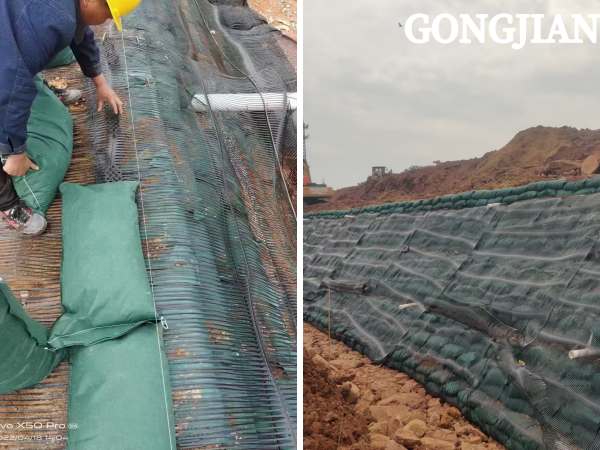
HDPP Uniaxial Geogrids
Manufacturing Process
HDPP uniaxial geogrids are manufactured using high-density polypropylene through extrusion, perforation, and stretching processes similar to HDPE. However, the different molecular structure of polypropylene leads to distinct tensile properties and application scenarios.
Performance Characteristics
Higher Impact Resistance: Suitable for dynamic load conditions, such as ports and airports.
Excellent Chemical Resistance: Particularly effective in environments with highly corrosive substances, such as landfills.
Superior Flexibility: More adaptable to complex terrains compared to HDPE.
Lightweight Design: Easier to transport and allows for faster installation.
Applications
Landfills: Reinforcing liners and cover systems for additional protection.
Bridge Abutments and Slopes: Ideal for conditions requiring impact resistance and adaptability.
Ports and Airport Runways: Providing reliable support in areas with repeated heavy loads.
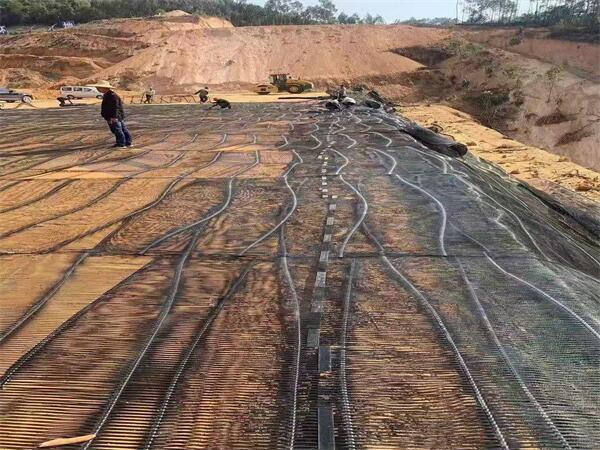
Comparison: HDPE vs. HDPP Uniaxial Geogrids
| Feature | HDPE Uniaxial Geogrids | HDPP Uniaxial Geogrids |
|---|---|---|
| Tensile Strength | Higher | Slightly lower |
| Chemical Resistance | Excellent | Exceptional |
| Flexibility | Lower | Higher |
| UV Resistance | High | Moderate |
| Impact Resistance | Moderate | Higher |
| Applications | Static loads, long-term reinforcement | Dynamic loads, complex terrains |
| Cost | Generally lower | Slightly higher |
Key Considerations for International Buyers
Shipping and Logistics
Both geogrids are supplied in roll form. However, HDPP geogrids are more compact due to their flexibility, potentially reducing shipping costs in some cases.
Environmental Adaptability
For environments exposed to prolonged sunlight or corrosive substances, buyers should prioritize products with superior UV and chemical resistance.
Project-Specific Requirements
For static loads or projects requiring long-term reinforcement, HDPE geogrids are more cost-effective.
For dynamic loads or projects involving complex environments, HDPP geogrids are the better choice.
Conclusion
HDPE and HDPP uniaxial geogrids both excel in soil reinforcement and load distribution, yet their differences make them suited to distinct applications. Buyers should select the product that aligns with their project’s specific needs and budget. HDPE geogrids are more cost-effective for static and long-term applications, while HDPP geogrids offer superior performance under dynamic loads and challenging conditions.
Partnering with reputable suppliers ensures access to high-quality products, detailed specifications, and technical support, helping buyers achieve stability, longevity, and cost efficiency in their projects.


