

Geotextile Polypropylene vs. Polyester: Key Differences, Benefits, and Applications
Introduction
When selecting the right geotextile for a construction or civil engineering project, understanding the differences between polypropylene geotextiles and polyester geotextiles is crucial. These two materials offer distinct properties that can significantly impact the performance, durability, and cost-effectiveness of your project. In this comprehensive guide, we’ll explore their features, advantages, and ideal applications to help international buyers make informed purchasing decisions.
What Are Geotextiles?
Geotextiles are synthetic fabrics used in civil engineering to enhance soil stability, provide separation, and aid in drainage and filtration. Manufactured primarily from polypropylene (PP) or polyester (PET), geotextiles are essential for projects requiring soil reinforcement, erosion control, and water management. Both materials have unique properties, making them suitable for specific applications.
Key Properties of Polypropylene Geotextiles
Polypropylene geotextiles are known for their durability and resistance to chemical degradation. These are typically made from thermoplastic polymers, providing excellent performance in various challenging environments.
Advantages of Polypropylene Geotextiles:
High Chemical Resistance: Ideal for acidic or alkaline soil conditions, as polypropylene resists most chemicals, oils, and solvents.
Low Water Absorption: PP geotextiles repel moisture, making them suitable for drainage and wetland applications.
UV Resistance: Effective in outdoor projects with moderate sun exposure.
Lightweight and Flexible: Easy to transport and install without compromising performance.
Common Applications:
Road Construction: Used to reinforce subgrades and prevent soil mixing.
Landfill Liners: Ensures separation and prevents contamination in hazardous environments.
Drainage Systems: Promotes efficient water flow while blocking soil particles.
Key Properties of Polyester Geotextiles
Polyester geotextiles are highly valued for their tensile strength and resistance to deformation. They perform exceptionally well under heavy loads and are suitable for long-term projects requiring reliable soil reinforcement.
Advantages of Polyester Geotextiles:
Superior Tensile Strength: Withstands significant stress, making it ideal for heavy-duty applications.
Thermal Stability: Maintains strength and structure across a wide temperature range.
Long-Term Durability: Excellent resistance to biological degradation and aging.
Cost-Effective for Specific Uses: Often more economical for projects with low chemical exposure.
Common Applications:
Retaining Walls: Provides reinforcement to prevent soil erosion and structural collapse.
Slope Stabilization: Used in steep terrains to enhance stability.
Railway Projects: Ensures track stability and load distribution.
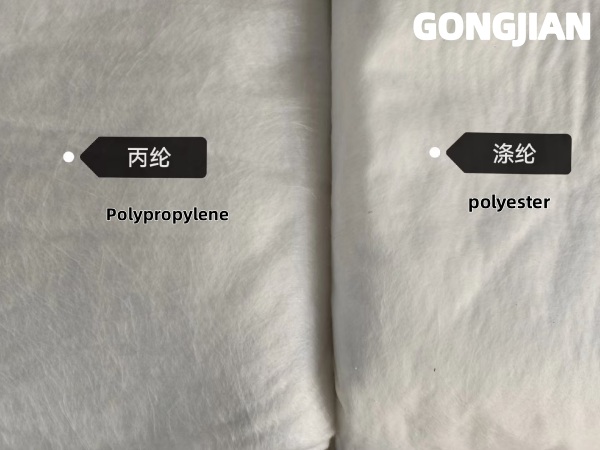
Polypropylene vs. Polyester Geotextiles: A Side-by-Side Comparison
| Property | Polypropylene Geotextile | Polyester Geotextile |
|---|---|---|
| Chemical Resistance | Excellent resistance to acids, bases, and chemicals | Moderate resistance; not ideal for alkaline environments |
| Tensile Strength | Good tensile strength | Superior tensile strength, especially for heavy loads |
| Water Absorption | Minimal water absorption | Absorbs more moisture compared to PP |
| UV Resistance | Moderate | Limited; may degrade with prolonged sun exposure |
| Thermal Stability | Performs well in most temperatures | Performs better under high thermal stress |
| Cost | Generally cost-effective | Slightly more expensive for high-performance needs |
How to Choose the Right Geotextile for Your Project
Selecting between polypropylene and polyester geotextiles depends on several factors, including environmental conditions, load requirements, and project objectives.
Consider the Following:
Soil Conditions: For chemically aggressive soils, choose polypropylene.
Load-Bearing Needs: For projects requiring higher tensile strength, polyester is the better option.
Moisture Management: Polypropylene is ideal for drainage-heavy applications due to its low water absorption.
Budget: Evaluate cost-performance balance based on long-term durability and project scale.
Why Choose Us as Your Geotextile Supplier?
As a trusted international supplier of geotextiles, we provide high-quality polypropylene and polyester products tailored to meet your specific needs. Our geotextiles are manufactured to international standards, ensuring durability, reliability, and cost-effectiveness for your projects.
Contact us today for expert advice and custom solutions to enhance your construction projects with the right geotextile materials.
Conclusion
Both polypropylene geotextiles and polyester geotextiles offer unique benefits and applications. By understanding their properties and selecting the right material for your project, you can ensure enhanced performance, reduced costs, and long-term reliability. Whether you need superior chemical resistance or unmatched tensile strength, the right geotextile choice is essential for your success.
For more information or to place an order, reach out to our team of experts today. We’re here to help you build a stronger future!


