


Geogrid Reinforcement for Retaining Wall
In civil engineering, retaining walls are a crucial structural element used to prevent soil landslides, protect land, and ensure building safety. Geogrids, as high-performance geosynthetic materials, play a crucial role in constructing retaining walls due to their unique performance characteristics. This article will thoroughly explore the types, performance characteristics, and benefits of geogrid for retaining walls, providing comprehensive and professional references for practitioners in related fields.
Types of Geogrids Used for Retaining Walls
Geogrids are primarily classified into four types based on their materials and manufacturing processes: plastic geogrids, steel-plastic geogrids, fiberglass geogrids, and polyester warp-knitted geogrids. In retaining wall applications, plastic geogrids and steel-plastic geogrids are the most commonly used due to their excellent performance.
●Plastic Geogrid
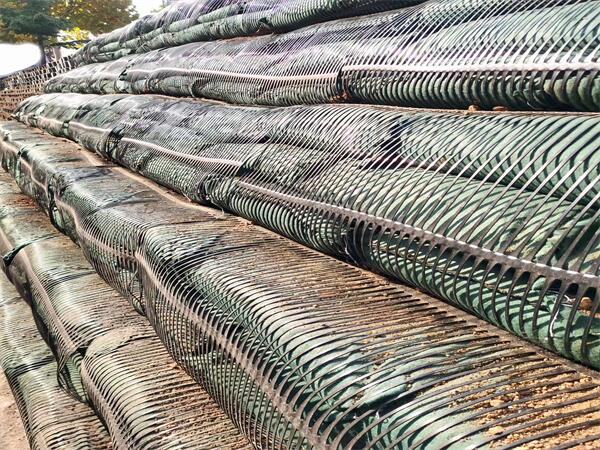
A plastic geogrid is a two-dimensional or three-dimensional mesh structure made from high molecular weight polymers, such as polypropylene (PP) and polyethylene (PE), through thermoplastic or molding processes. It offers good tensile strength, corrosion resistance, and aging resistance, and can adapt to various complex environmental conditions. Plastic geogrids are widely used in retaining wall construction because of their low cost and ease of installation.
●Steel-Plastic Geogrid
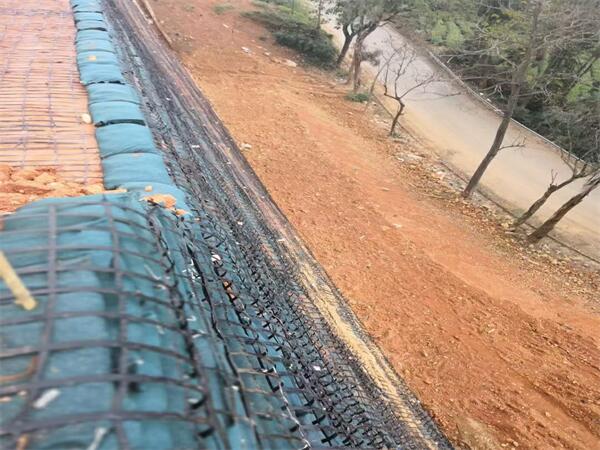
A steel-plastic geogrid is an enhanced plastic geogrid reinforced with metal materials, such as steel wire, to increase its strength and stiffness. A steel-plastic geogrid not only retains the corrosion and aging resistance of a plastic geogrid but also provides greater bearing capacity and deformation resistance. Steel-plastic geogrids are preferred for retaining wall projects that experience significant soil pressure or lateral forces.
Performance Characteristics of Geogrid
High Strength and Bearing Capacity
One of the main advantages of geogrids is their high strength and bearing capacity. Both plastic and steel-plastic geogrids offer high tensile and shear strength, effectively resisting soil pressure and lateral forces. This high strength allows geogrids to play a crucial supporting role in retaining wall construction, ensuring their stability and safety.
Corrosion and Aging Resistance
Geogrid materials exhibit excellent corrosion and aging resistance. Over time, they resist the erosion of chemical substances and environmental factors, maintaining their physical and mechanical stability. This characteristic extends the service life of geogrid used in retaining walls in engineering projects that are exposed to harsh natural environments.
Good Permeability and Strong Drainage Capacity
Geogrids offer good permeability and can effectively drain water, reducing water pressure on retaining walls. Good permeability is crucial for ensuring the stability of retaining walls. Geogrid permeability helps reduce water pressure behind the wall, decreases soil pressure, and enhances overall wall stability.
Convenient Construction and Cost Savings
Geogrid installation is relatively simple, significantly shortening construction time and reducing costs. Additionally, their lightweight and transportable nature reduces material procurement and transportation costs. Using geogrids as reinforcement in retaining walls can improve project quality and reduce costs.
Why Geogrid is Suitable for Use in Retaining Walls
●Enhance Stability
Geogrids improve the stability of retaining walls by evenly distributing soil pressure across the structure. The grid structure of geogrids locks soil particles, preventing sliding and deformation, and further enhancing the wall's resistance to sliding.
●Improve Seismic Performance
Earthquakes pose a significant threat to the stability of retaining walls. Geogrids have excellent flexibility and ductility, allowing them to absorb and dissipate earthquake impact forces, reduce wall vibration, and enhance seismic performance.
●Improve Permeability
Geogrids good permeability and drainage capacity help reduce the impact of water pressure on retaining walls. The permeability performance of geogrids directly affects the stability of retaining walls, significantly improving it and enhancing overall wall stability.
●Extend Service Life
The corrosion resistance and aging resistance of geogrids enable them to maintain stable physical and mechanical properties during long-term use. This characteristic extends the service life of retaining walls reinforced with geogrids. Additionally, the convenience of construction and cost savings provided by geogrids further reduce the total cost of retaining wall construction and maintenance.
Advantages of Using Geogrids for Retaining Walls
●Longevity Advantage
Geogrids excellent corrosion and aging resistance enable them to perform reliably under harsh environmental conditions over extended periods. Retaining walls made with geogrids can have a service life exceeding 100 years in certain environments, greatly improving long-term stability and reliability.
●Cost Advantage
Geogrid installation is relatively straightforward, which shortens the construction period and reduces costs. The lightweight and transportable nature of geogrids also reduces material procurement and transportation costs. Furthermore, their high strength and durability lower maintenance and reconstruction costs caused by soil erosion, wall cracking, and other issues, leading to significant long-term cost savings.
●Strength and Stability Advantages
The high strength and stiffness of geogrids provide robust support and restraint for retaining walls. Their grid structure effectively locks soil particles, forming a stable soil structure that significantly enhances the anti-slip, anti-overturning, and anti-deformation capabilities of retaining walls. This improvement in strength and stability is particularly valuable in complex geological conditions and harsh natural environments.
●Environmental Protection and Sustainability Advantages
As an environmentally friendly geosynthetic material, geogrids have minimal environmental impact during production and can be recycled and reused. Their use in retaining wall construction helps reduce the consumption of natural resources and minimizes environmental pollution. Additionally, the long service life of geogrids reduces waste from frequent material replacement, contributing to the sustainable development of engineering projects.
●Design and Construction Flexibility Advantages
Geogrids offer flexibility in design and construction. Designers can select the appropriate type, specification, and installation method of geogrid according to specific engineering requirements to achieve optimal reinforcement effects. Their compatibility with various materials, such as soil, rock, and concrete, provides additional options for retaining wall construction.
●Convenient Monitoring and Maintenance Advantages
Retaining walls reinforced with geogrids also offer advantages in monitoring and maintenance. The clear and visible grid structure facilitates daily inspections and checks. If cracks, deformations, or other issues are detected, timely measures can be taken for repair or reinforcement. The corrosion resistance and durability of geogrids further reduce maintenance needs and associated costs.
Conclusion
In summary, geogrids, as high-performance geosynthetic materials, play a crucial role in retaining wall construction. Their high strength, durability, permeability, and ease of installation provide significant advantages in terms of lifespan, cost, strength, and reliability. With ongoing technological advancements and development of engineering techniques, the application prospects of geogrids in retaining walls and other civil engineering fields will continue to expand. For projects requiring retaining walls, choosing geogrids as reinforcement materials is undoubtedly a wise decision.

