


Geogrids in Embankment Construction: Reinforcing Highway and Railway Slope Protection
In the context of increasingly sophisticated transportation networks, highways and railways are vital to national economic development. The quality of their construction directly impacts transportation efficiency and safety. Embankments, as key components supporting road structures and ensuring smooth driving, require particular attention to stability and durability. Geogrids, as high-performance geosynthetic materials, have gained widespread application and recognition in embankment construction, especially for slope protection. This article explores the advantages of geogrids in highway and railway embankment slopes, their mechanisms, types, selection recommendations, and construction considerations.
Overview of Geogrids
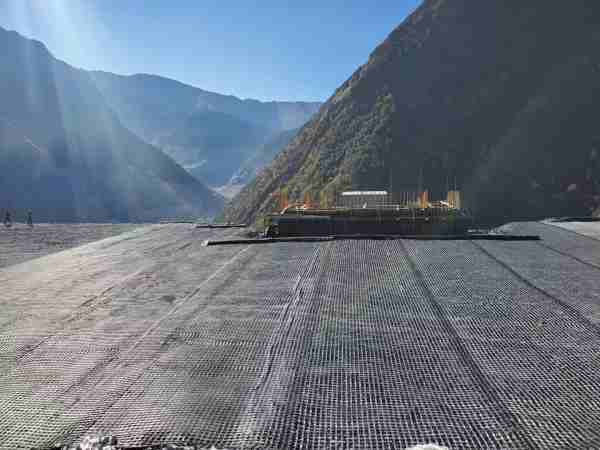
Geogrids are mesh-like materials made from high-strength polymer materials (such as polypropylene, polyethylene, or polyester) through specialized processing techniques. The unique grid structure of geogrids provides excellent tensile strength, extensibility, and corrosion resistance, effectively distributing loads and enhancing the integrity and stability of the soil. Depending on processing methods and material characteristics, geogrids are available in various types, including plastic geogrids, steel-plastic geogrids, and polyester geogrids, to meet different engineering needs.
Roles of Geogrids in Embankment Slope Protection
1. Enhancing Soil Stability
Embankment slopes are prone to instability due to rainfall, vehicle loads, and self-weight. When geogrids are installed within the slope soil, their grid structure binds loose soil into a cohesive unit, forming a reinforced composite that significantly improves soil shear strength and stability. Additionally, the tensile performance of geogrids effectively limits lateral displacement of the soil, preventing slope failure and collapse.
2. Improving Drainage Performance
Compared to other slope protection methods, geogrids offer superior permeability. Their mesh structure quickly channels rainwater or groundwater into drainage systems, reducing pore water pressure within the soil and mitigating issues such as soil softening and deformation caused by water accumulation. Good drainage performance helps maintain a dry and stable embankment slope, extending the lifespan of the road.
3. Cost Savings
Compared to traditional embankment protection methods (such as masonry or concrete retaining walls), geogrids offer advantages of lower material costs, simpler construction, and shorter project durations. Using geogrids for embankment slopes can reduce overall project investment, accelerate construction, and minimize environmental impact.
Construction Key Points and Considerations
1. Pre-Construction Preparation
Before construction, clear the slope of weeds, tree roots, and other debris, and assess the slope's stability. Determine the number of geogrid layers, spacing, and anchoring methods according to design requirements.
2. Geogrid Installation
During installation, ensure that geogrids are laid flat and wrinkle-free, and that they fit snugly against the slope. Use specialized nails or anchor pins to secure the geogrid to the slope, ensuring it does not shift during construction. For multiple layers, ensure that adjacent geogrid layers overlap to create a continuous protective layer.
3. Soil Filling and Compaction
After installing the geogrids, backfill with soil or gravel at a controlled rate to avoid excessive impact on the geogrid. Use appropriate compaction machinery to compact the fill in layers, ensuring tight integration between the soil and the geogrid, forming a stable reinforced composite.
4. Post-Construction Maintenance
After completing construction, regularly inspect and maintain the embankment slope to identify and address potential issues. Repair or replace any damaged or shifted geogrids promptly to ensure long-term stability of the embankment slope.
Client Selection Recommendations
· For general embankment slope projects seeking cost-effectiveness and ease of construction, plastic geogrids are a good choice. Their lightweight, high strength, and ease of installation effectively reduce project costs and time.
· In moist or highly corrosive environments, or for projects with high environmental requirements, polyester geogrids are more suitable. Their excellent corrosion resistance and environmental friendliness ensure long-term stability and environmental protection of the embankment slope.
· For embankment slope projects requiring high load-bearing capacity, such as heavy traffic or high fill conditions, steel-plastic geogrids are the preferred option. Their exceptional load-bearing capacity and durability ensure safety and stability of the embankment slope under extreme conditions.
Geogrids, as advanced geosynthetic materials, demonstrate outstanding performance and broad application prospects in highway and railway embankment slope construction. Their benefits in enhancing soil stability, improving drainage performance, and reducing construction costs offer safer, more economical, and efficient solutions for embankment construction. With ongoing technological advancements and expanding applications, geogrids are poised to play an increasingly vital role in transportation infrastructure development.


