

Geocells in Road Construction
In the rapidly advancing field of road construction, geocells, known for their lightweight and efficient engineering properties, are increasingly demonstrating their unique advantages. This article aims to provide a comprehensive, detailed, and rigorous exploration of the application of geocells in road construction, covering their basic structure, range of applications, mechanisms, and advantages.
Basic Structure of Geocells
Geocells are three-dimensional cellular structures made from high-strength polypropylene (PP) or high-density polyethylene (HDPE). These materials are connected into a honeycomb-like three-dimensional grid using advanced technologies such as ultrasonic welding. Geocells are characterized by their light weight, high strength, corrosion resistance, and aging resistance. Their basic structure allows for flexible application across various geological conditions, providing robust support for road construction.
Structural Features
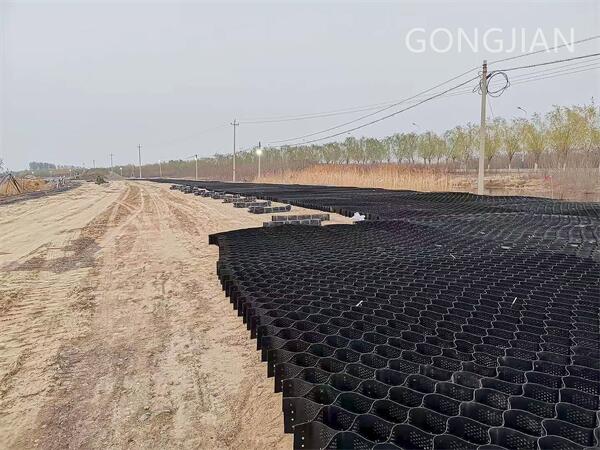
Three-Dimensional Cellular Structure: When expanded, geocells form a honeycomb pattern. Each cell is both independent and closely connected, creating a strong three-dimensional grid.
Lightweight and High Strength: Despite their light weight, the materials possess high tensile strength and load-bearing capacity, effectively dispersing and supporting loads from above.
Corrosion and Aging Resistance: Polypropylene and polyethylene materials have excellent chemical stability, resisting acid, alkali corrosion, and photo-oxidative aging, making them suitable for harsh environments.
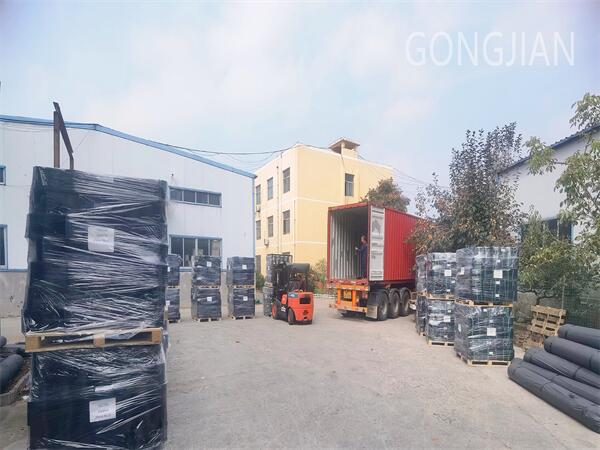
Expandable and Collapsible: Geocells can be stretched into a grid during installation and collapsed for transportation, facilitating storage and handling.
Applications of Geocells in Road Construction
Range of Applications
Geocells are widely used in road construction, including but not limited to soft soil foundation reinforcement for highways and railways, as well as road construction in mountainous and desert regions with unique geological conditions.
Mechanisms of Action
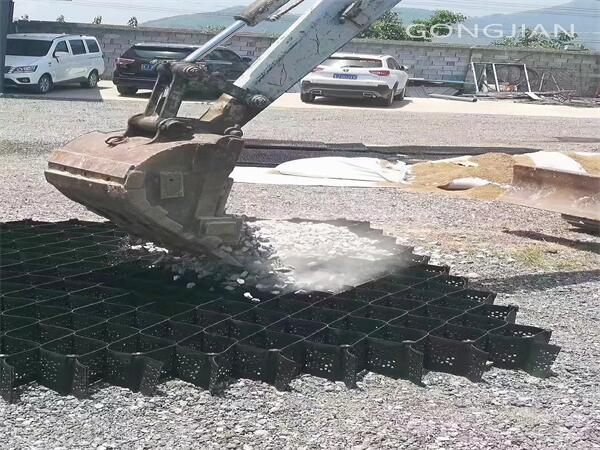
Enhancing Foundation Load Capacity: Geocells, when laid over a foundation and filled with granular materials (such as crushed stone or sand), create a stable cushion layer that significantly improves the foundation's load-bearing capacity and stability.
Load Distribution: The cellular structure of geocells effectively distributes loads from above, reducing stress concentration in the foundation and preventing pavement cracking and subsidence.
Improving Slope Stability: In mountainous road construction, geocells can be used for slope protection, enhancing slope stability and preventing landslides and collapses.
Specific Application Cases
Partial Fill and Cut Foundation Treatment: In mountainous or hilly areas, road construction often requires partial fill and cut methods. Geocells effectively constrain lateral movement of the fill material, improving the overall integrity and stability of the foundation.
Foundation Construction in Arid Areas: In arid regions, road foundations need to address wind erosion and sand burial. Geocells can form a stable protective layer, preventing wind and sand erosion and ensuring foundation safety.
Soft Soil Foundations for Highways: For highways with soft foundations, geocells can significantly reduce labor intensity, decrease foundation thickness, speed up construction, and lower project costs due to their efficient performance.
Advantages of Geocells in Road Construction
Efficiency: Geocells are easy and quick to install, greatly enhancing the efficiency of road construction. Their cellular structure allows for rapid stabilization of fill materials to meet design requirements, shortening the construction period.
Cost-Effectiveness: Geocell materials are inexpensive and readily available. Additionally, their fast installation and low maintenance costs help control overall project expenses. Geocells can also use locally sourced fill materials, further reducing project costs.
Environmental Benefits: Geocells are made from environmentally friendly polymers that can be recycled after disposal, ligning with sustainable development goals. Their use in road construction helps reduce soil erosion and ecological damage, providing significant environmental benefits.
Durability: Geocells exhibit excellent corrosion and aging resistance, maintaining stable performance in various harsh environments. Their cellular structure effectively confines the movement of fill materials, preventing loose deformation and extending the road's lifespan.


