

Introduction to Non Woven Polyester Geotextile
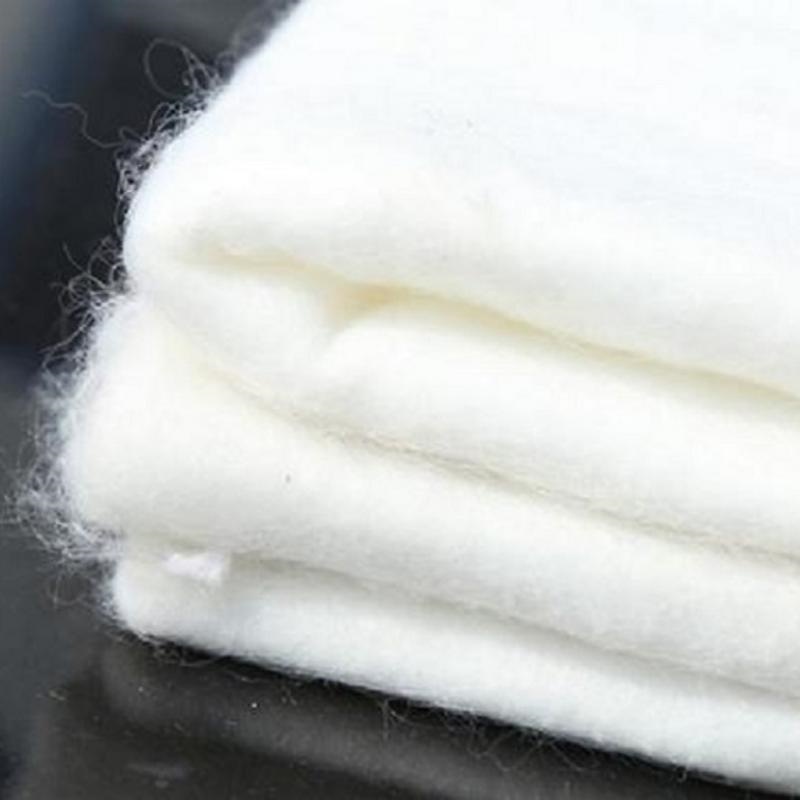
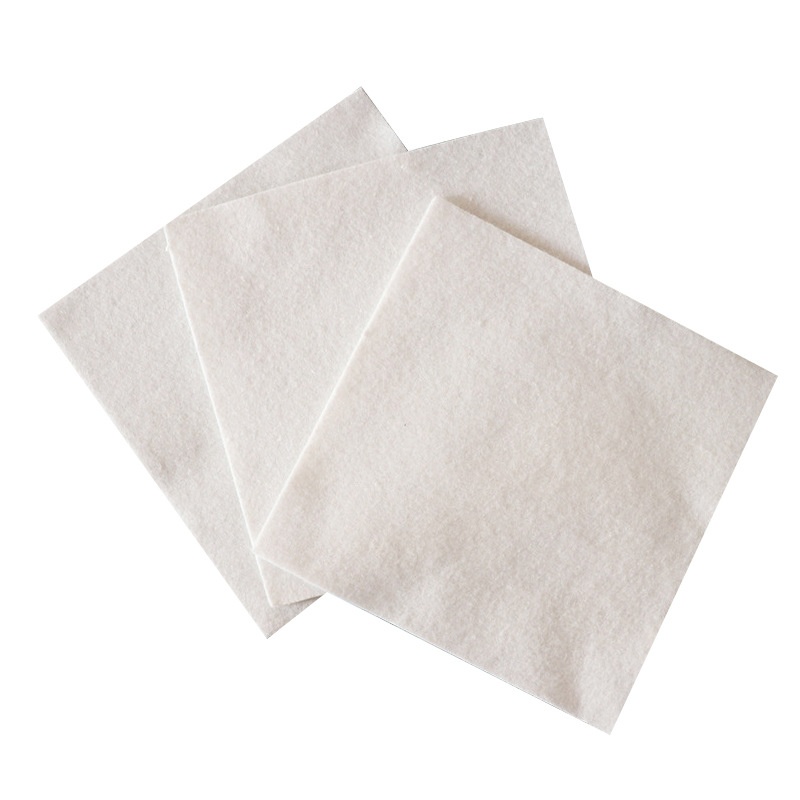
Non woven polyester geotextile is an drainage fabric in civil engineering, notable for its outstanding physical properties and wide range of applications. Made from polyester fibers through nonwoven techniques, this fabric material does not require traditional weaving processes. Instead, fibers are interwoven using methods such as staple fiber needle-punching and filament spunbond needle-punching to form a fabric with a stable structure. Due to its high strength, durability, and environmental adaptability, non woven polyester geotextile is widely used worldwide.At the end of the article, a table of product specifications and performance parameters is attached.
Production Processes for Non Woven Polyester Geotextile
The production of non woven polyester geotextile mainly involves two methods:staple fiber needle-punching and filament spunbond needle-punching. Each method has distinct features. For more details, refer to the production process of polypropylene nonwoven geotextile.
• Staple Fiber Needle-Punching Characteristics:
Even fiber distribution, stable structure, good filtration and drainage, and lower production cost.
• Filament Spunbond Needle-Punching
Characteristics: Higher strength and durability due to the continuous and tight bonding of fibers. It also offers excellent UV resistance, high-temperature tolerance, and better extensibility. This method is particularly suitable for projects requiring high filter and separation effects.
Product Classification and Characteristics
Depending on the production method, non woven polyester geotextile is classified into staple fiber needle-punched and filament spunbond needle-punched types, each with unique characteristics and advantages:
Staple Fiber Needle-Punched Non Woven Polyester Geotextile
Characteristics: Uniform fiber distribution, stable structure, superior filter and drainage, acid and alkali resistance, corrosion resistance, aging resistance, and relatively low cost.
Advantages: Ideal for projects with moderate performance requirements or those needing high filter and drainage efficiency. Its lower cost and reasonable performance make it a preferred choice for many projects.
Filament Spunbond Needle-Punched Non Woven Polyester Geotextile
Characteristics: Higher strength and durability due to the tight and continuous fiber connections. Excellent UV resistance, high-temperature tolerance, creep resistance, and strong extensibility. Provides effective separation.
Advantages: Suitable for projects with higher performance requirements, such as embankments and slope protection in water conservancy projects, foundation isolation and reinforcement for roads, railways, and airport runways, and soft foundation treatment and beach embankments in port engineering. Its exceptional performance ensures long-term stability and safety for engineering projects.
Comparison of Non Woven Polyester and Polypropylene Geotextile
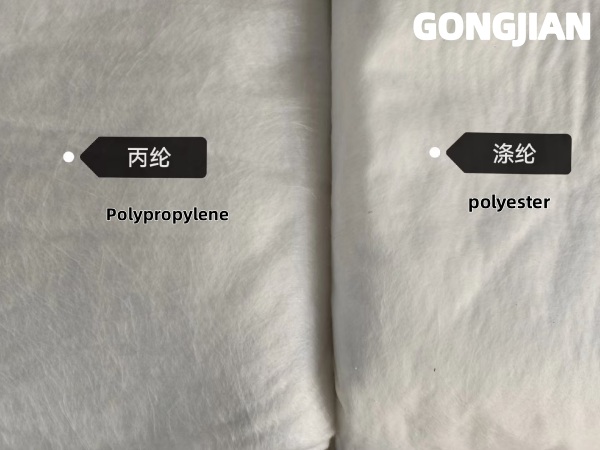
Although both non woven polyester and polypropylene geotextiles are types of nonwoven fabrics, their different raw materials result in varied performance:
Non Woven Polyester Geotextile
Advantages: Higher UV resistance and thermal stability, making it suitable for more complex environments.
Disadvantages: Higher price compared to polypropylene.
Non Woven Polypropylene Geotextile
Advantages: Strong acid and alkali resistance, high corrosion resistance, good aging performance, and relatively lower cost.
Disadvantages: Performance may slightly decline under extreme conditions, such as high temperatures or intense UV exposure.
Selection Recommendations
• If your project has cost constraints and operates in relatively mild conditions, polypropylene geotextile is a cost-effective choice.
• For projects in harsher environments, such as high temperatures or strong UV exposure, non woven polyester geotextile may be more suitable.
Product Specifications and Performance
Staple Fiber Needle-Punched Polypropylene Non woven Geotextile:
| Index Properties | Test Method | Unit | |||||
| Weight | ASTM D5261 | g/m2 | 200 | 300 | 400 | 500 | 600 |
| Ultimate Tensile Strength | ASTM D4595 | ≥kN/m | 8.5 | 13 | 18.5 | 23 | 28 |
| Tensile Elongation | ASTM D4595 | % | 50 | ||||
| Grab Tensile Strength | ASTM D4632 | ≥N | 550 | 930 | 1180 | 1400 | 1720 |
| Grab Elongation | ASTM D4632 | % | 50 | ||||
| Trapezoid Tear Strength | ASTM D4533 | ≥N | 220 | 330 | 445 | 560 | 640 |
| CBR Puncture Strength | ASTM D6241 | ≥N | 1600 | 2430 | 3390 | 4110 | 5500 |
| Puncture Resistance | ASTM D4833 | ≥N | 382 | 565 | 817 | 970 | 1130 |
| Drop Cone Resistance(hole-φ) | BS EN 918 | mm | 30 | 24 | 16 | 15 | 13 |
Hydraulic Properties | |||||||
| Apparent Opening Size O90 | ASTM D4751 | ≤mm | 0.12 | 0.11 | 0.09 | 0.08 | 0.08 |
| Permeability | ASTM D4491 | cm/s | 0.41 | 0.40 | 0.39 | 0.39 | 0.39 |
| Physical Identification Properties | |||||||
| Thickness | ASTM D5199 | mm | 2.1 | 2.5 | 3.0 | 3.5 | 3.8 |
| Roll Width | – | m | 4-6 | ||||
| Approx Load Qty per 40HQ | M2 | 36000 | 24000 | 18000 | 14000 | 12000 | |
PET Filament Nonwoven Geotextile:
Index Properties | Test Method | Unit | Values | |||||
| 150 | 200 | 300 | 400 | 500 | 600 | |||
| Color | – | – | White or Black | |||||
| Ultimate Tensile Strength, MD | ASTM D4595 | kN/m | 11 | 14 | 19 | 27 | 37 | 41 |
| Ultimate Tensile Strength, TD | ASTM D4595 | kN/m | 10 | 12 | 17 | 25 | 34 | 38 |
| Tensile Elongation | ASTM D4595 | % | 45 | 50 | 50 | 60 | 60 | 60 |
| Grab Tensile Strength, MD | ASTM D4632 | N | 600 | 850 | 1250 | 1700 | 2100 | 2500 |
| Grab Tensile Strength, TD | ASTM D4632 | N | 550 | 700 | 1100 | 1450 | 1800 | 2150 |
| Grab Elongation | ASTM D4632 | % | 45 | 50 | 50 | 60 | 60 | 60 |
| Trapezoid Tear Strength, MD | ASTM D4533 | N | 300 | 350 | 490 | 630 | 770 | 920 |
| Trapezoid Tear Strength, TD | ASTM D4533 | N | 270 | 330 | 450 | 610 | 750 | 900 |
| CBR Puncture Strength | ASTM D6241 | N | 1800 | 2300 | 3200 | 4400 | 5800 | 6900 |
| Apparent Opening Size O90 | ASTM D4751 | mm | 0.11 | 0.11 | 0.09 | 0.08 | 0.08 | 0.08 |
| Water Flow Q100 | ASTM D4491 | L/m2/s | 235 | 220 | 185 | 125 | 90 | 80 |
| U.V. Resistance | ASTM D4355 | % @ 500h | 70 | 70 | 70 | 70 | 70 | 70 |
| Weight | ASTM D5261 | g/m2 | 150 | 200 | 300 | 400 | 500 | 600 |
| Thickness | ASTM D5199 | mm | 1.8 | 2.3 | 3.2 | 3.9 | 4.4 | 4.8 |
| Roll Width | – | m | 1-6 | |||||
| Roll Length | – | m | 50-200 | |||||