
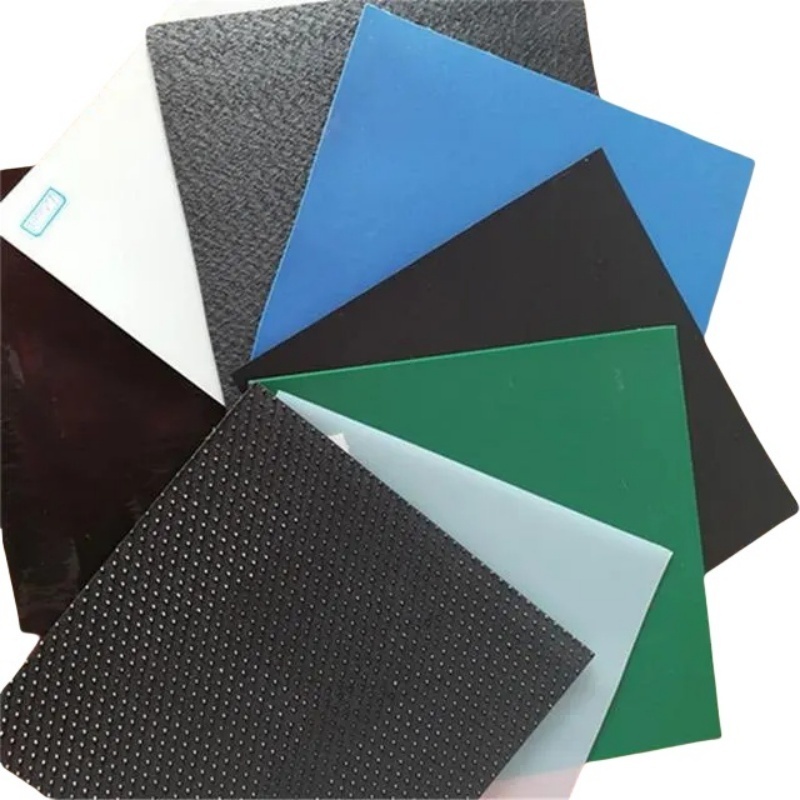
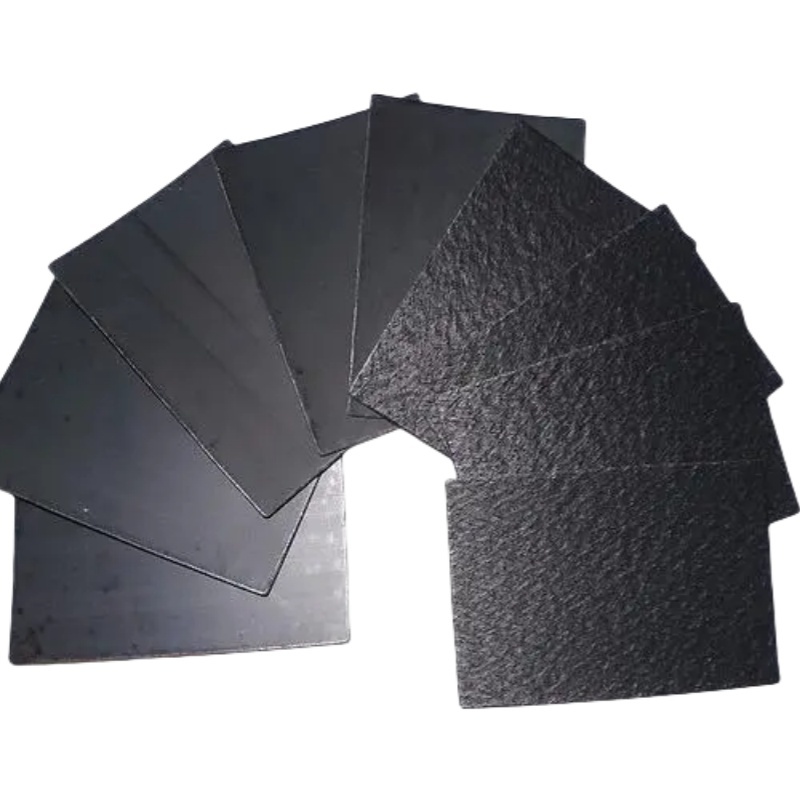
Textured HDPE Geomembrane
Textured HDPE geomembrane, also known as textured geomembrane, is a geosynthetic material made from high-density polyethylene (HDPE) resin particles. It is formed through a three-layer co-extrusion blown film process. The geomembrane is composed of approximately 97.5% high-quality polyethylene, 2.5% carbon black, and small amounts of antioxidants and heat stabilizers. Textured HDPE geomembranes come in single-sided textured, double-sided textured, and single/double column-point geomembrane varieties. In engineering applications, they are primarily used to increase the friction coefficient with the substrate and slopes, thereby enhancing friction and providing anti-slip functions.At the end of the article, a table of product specifications and performance parameters is attached.
Differences Between Textured and Smooth Geomembranes
Textured and smooth geomembranes differ in several key aspects:
• Appearance:
Textured geomembranes have a rough surface, while smooth geomembranes are mirror-like, smooth, and reflective. Textured geomembranes appear more matte, while smooth ones are shinier.
• Performance:
Textured geomembranes have a higher friction coefficient compared to smooth ones. The friction coefficient, which measures the geomembrane's surface friction performance, includes surface shear strength and friction angle. Additionally, textured geomembranes exhibit better elongation at break, resistance to environmental stress cracking, and adaptability to varying environments.
• Application:
Textured geomembranes are primarily used for slope stabilization, anti-slip measures, and capping projects in landfills and tailing ponds, while smooth geomembranes are used as the main waterproofing layer in landfill bottoms, artificial lakes, and reservoirs.
• Cost:
The manufacturing cost of textured geomembranes is higher than that of smooth ones due to the more complex production process, making textured geomembranes approximately 20% to 30% more expensive.
2. Which is Better: Textured or Smooth HDPE Geomembrane?
Both textured and smooth geomembranes have distinct advantages, so one isn't necessarily better than the other. Textured geomembranes, with their rough surface, provide increased friction and adhesion, making them suitable for dam reinforcement. In contrast, smooth geomembranes are more cost-effective. The choice between them depends on the specific application area.
3. HDPE Double Column-Point Textured Geomembrane
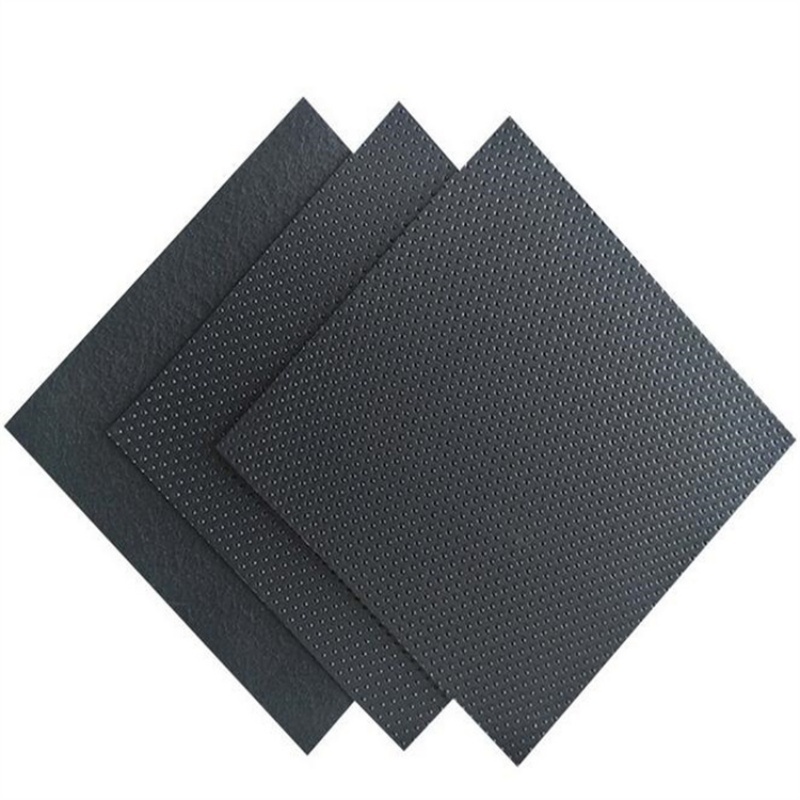
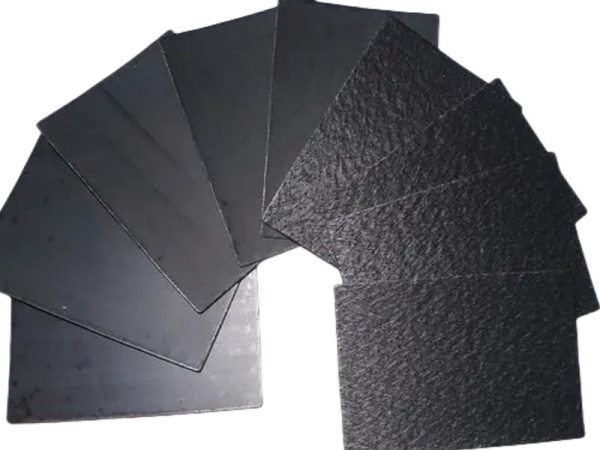
HDPE double column-point textured geomembranes maintain the strong mechanical properties and good elongation of the original resin while adding enhanced tensile strength, abrasion resistance, puncture resistance, and protection against chemical erosion from acids, alkalis, and microorganisms. The column points are evenly distributed and formed through a custom embossing roller, making the surface visually appealing and increasing the friction coefficient. Key features include:
• Aesthetic column-point design
• Even distribution
• High friction coefficient
• Waterproof, anti-contamination, and anti-slip properties
• Easy installation
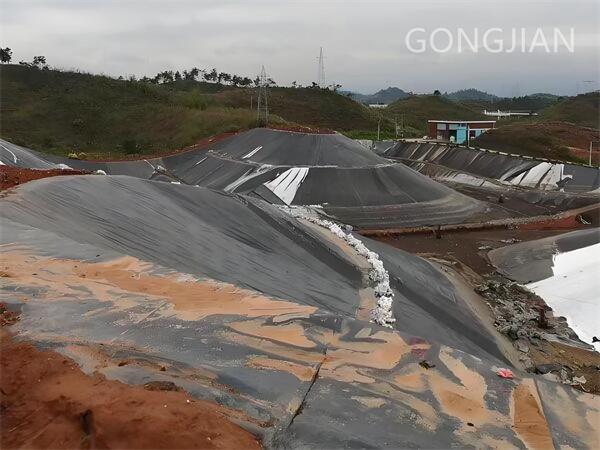
Textured HDPE geomembrane is a new type of waterproofing material. With its single-textured, double-textured, and column-point options, it increases friction and provides anti-slip functionality, making it ideal for steep slopes and vertical waterproofing to improve project stability.
Product Series
Textured geomembranes are mainly categorized into three types:
• Single-Sided Textured Geomembrane
This type has one rough side and one smooth side. In slope waterproofing projects, the rough side typically faces upward to contact geotextile, providing an anti-slip effect.
• Double-Sided Textured Geomembrane
Both sides of this geomembrane are textured, suitable for slope waterproofing, where both the upper and lower surfaces can contact geotextile, enhancing the anti-slip effect.
• Column-Point Geomembrane
This geomembrane has uniform raised points on one or both sides, providing an evenly distributed, aesthetically pleasing textured surface. It is also used in slope waterproofing projects, offering waterproofing, anti-slip, and anti-contamination benefits.
Specifications:
| Test Properties | Unit | Standard | Test frequency | GJ10 | GJ15 | GJ20 |
|---|---|---|---|---|---|---|
| Thickness | mm | D5994 | per roll | 1.00 | 1.50 | 2.00 |
| Asperity Height | mm | D7446 | Every 2nd roll (2) | 0.25 | ||
| Density | g/cc | D1505/D792 | 90,000kg | 0.94 | ||
| Tensile Properties | ||||||
| Yield Strength | KN/m | D6693 Type IV | 9,000 kg | 15 | 22 | 29 |
| Break Strength | KN/m | 10 | 16 | 21 | ||
| Yield Elongation | % | 12 | 12 | 12 | ||
| Break Elongation | % | 100 | 100 | 100 | ||
| Tear Resistance | N | D1004 | 20,000kg | 125 | 187 | 249 |
| Puncture Resistance | N | D4883 | 20,000kg | 267 | 400 | 534 |
| Stress Crack Resistance | hr | D5397(App) | per GRI GM-10 | 300 hr | ||
| Carbon black content | % | D4218 | 9,000kg | 2.0-3.0% | ||
| Carbon black dispersion | D5596 | 20,000kg | For 10 different views: 9 in Categories 1 or 2 and 1 in Category 3 | |||
| Oxidative Induction Time | ||||||
| Standard OIT | min | D3895 | 90,000kg | 100 min | ||
| High pressure OIT | D5885 | 90,000kg | 400 min | |||
| Oven Aging at 85°C retained after 90 days | % | D5721 | per each formulation | 55% | ||
| Standard OIT | D3895 | 80% | ||||
| High pressure OIT | D5885 | 80% | ||||
| UV Resistance | ||||||
| High Pressure OIT – % retained after 1600 hrs | % | D5885 | per each formulation | 50% | ||
| Roll Width | m | 7 | 7 | 7 | ||
| Roll Length | m | 210 | 140 | 105 | ||
| Size stability | % | 2% | ||||
Textured HDPE geomembranes are mainly used for slope waterproofing. By increasing the friction between the geomembrane and the slope, they prevent slippage and improve the overall stability of geomembranes in engineering applications.