

With the growing global emphasis on environmental protection, waste management has become a critical issue for many nations. Kenya, a rapidly urbanizing country, faces significant challenges in managing its waste disposal facilities. Many old landfills contribute to severe environmental pollution. This case study demonstrates how our company collaborated with a Kenyan contractor to upgrade a landfill using high-quality HDPE geomembrane for landfill and other geosynthetic materials, resulting in a modernized and environmentally sustainable solution.
Project Background
The project was located on the outskirts of Nairobi, Kenya, and aimed to modernize a landfill that had previously been an unregulated waste dump. The old landfill posed several problems:
Leachate contamination: Untreated leachate seeped into the ground, polluting local water resources and soil.
Public health hazards: The landfill emitted foul odors and attracted disease vectors such as rodents and insects, negatively impacting nearby residents.
Rainy season challenges: Heavy rainfall washed garbage and leachate into surrounding farmlands and rivers, worsening pollution and endangering food safety.
Recognizing these issues, the Kenyan government sought international collaboration to implement advanced waste management practices and improve environmental safety.
Environmental Conditions and Material Selection
Geographical and Climate Conditions
The landfill site is situated in a semi-arid climate with pronounced rainy seasons. The high intensity of rainfall during these periods generates substantial amounts of leachate. Additionally, the area experiences strong UV radiation due to prolonged sunlight exposure, necessitating materials with superior weather resistance. The site's high groundwater table also underscored the importance of a robust containment system.
Material Selection
Considering the environmental characteristics and project requirements, we provided the following materials:
HDPE geomembrane for landfill(1.5 mm): The primary containment layer with exceptional impermeability, chemical resistance, and UV stability.
Geosynthetic clay liner (GCL): A secondary containment layer that adapts well to uneven surfaces and enhances overall impermeability.
Geonet drainage layer: Facilitates efficient leachate collection and drainage, particularly critical during rainy seasons.
Non-woven geotextile:Protects the HDPE geomembrane for landfill from punctures during installation and operation while serving as a separation layer.
These materials were selected to form an effective and durable containment and drainage system, addressing the site’s specific challenges.
Collaboration with the Client
Initial Consultation
The Kenyan contractor initially contacted us via an international procurement platform. They had several questions regarding the performance, installation, and adaptability of HDPE geomembranes for landfill to local conditions.
We conducted multiple consultations to address their concerns:
Performance and lifespan: We provided detailed test reports showcasing the HDPE geomembrane liner's impermeability, chemical resistance, and UV stability.
Environmental suitability: Based on geological surveys of the site, we recommended a 1.5 mm hdpe geomembranes for landfill to handle the area’s rainfall and terrain.
Technical support: To alleviate their concerns about installation challenges, we offered technical training and quality assurance services.
Contract Negotiation and Agreement
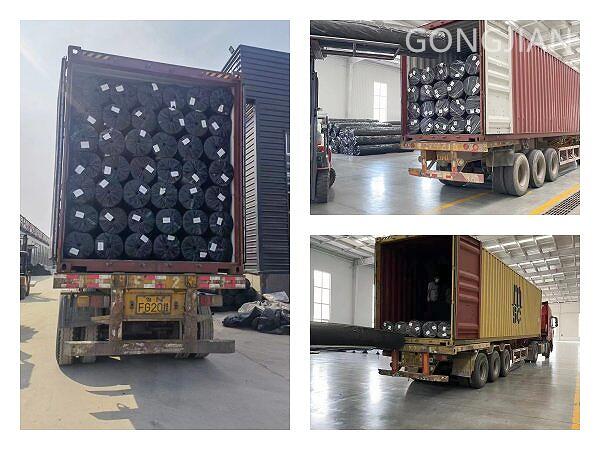
The client recognized our expertise and chose to partner with us after evaluating several suppliers. We finalized the agreement under FOB (Free on Board) terms, ensuring smooth delivery of materials from our factory in China to Mombasa Port in Kenya. Additionally, we included technical support and after-sales services to guarantee project success.
Support and Installation
Upon material arrival, our technical team provided online technical guidance to the Kenyan client.The services included:
Installation training: Conducted workshops to train the client’s construction team in geomembrane installation and welding techniques.
Quality assurance: Performed vacuum testing and spark testing to ensure all seams were properly sealed.
Construction optimization: Offered real-time adjustments to the installation process, enhancing material utilization and reducing costs.
Our close collaboration ensured that the project proceeded smoothly and met all quality standards.
Project Outcomes
Environmental Protection
The new containment system effectively prevented leachate from contaminating the groundwater and surrounding farmland.
Operational Improvements
The landfill’s drainage system improved efficiency, reducing operational challenges during the rainy season.
Social Impact
Nearby residents experienced a significant improvement in living conditions, with reduced odors and health risks. The project also enhanced the contractor's reputation and earned positive feedback from government authorities.
The client shared their appreciation:
“Your company provided not only excellent materials but also comprehensive technical support that greatly improved the efficiency and quality of our project. We look forward to future collaborations!”
Landfill Structure and Illustration
The landfill structure includes the following layers:
Compacted soil base: Provides a stable foundation for the containment system.
Geosynthetic clay liner (GCL): Enhances secondary containment and adapts to uneven terrain.
HDPE geomembrane liner: Serves as the primary barrier against leachate leakage.
Geonet drainage layer: Collects and channels leachate to designated drainage points.
Non-woven geotextile: Protects the HDPE membrane for landfill from potential punctures.
Waste and soil cover layers: Final layers to seal and manage the landfill.
Illustrations showcasing the landfill’s layered design and installation process provide a visual reference for potential clients and partners.
Conclusion
This case study highlights the critical role of HDPE Geomembrane for Landfill projects in addressing complex environmental challenges. By offering high-quality materials and tailored technical support, we enabled the client to meet international standards for waste management while achieving economic and social benefits. This successful collaboration exemplifies our commitment to supporting sustainable development globally.
Let us help you with your next project—together, we can build a cleaner and safer future.